Sports dispute resolution in the United Kingdom
ISE01/2025
Subject: Administration of Justice and Legal Services, sports, arbitration, mediation
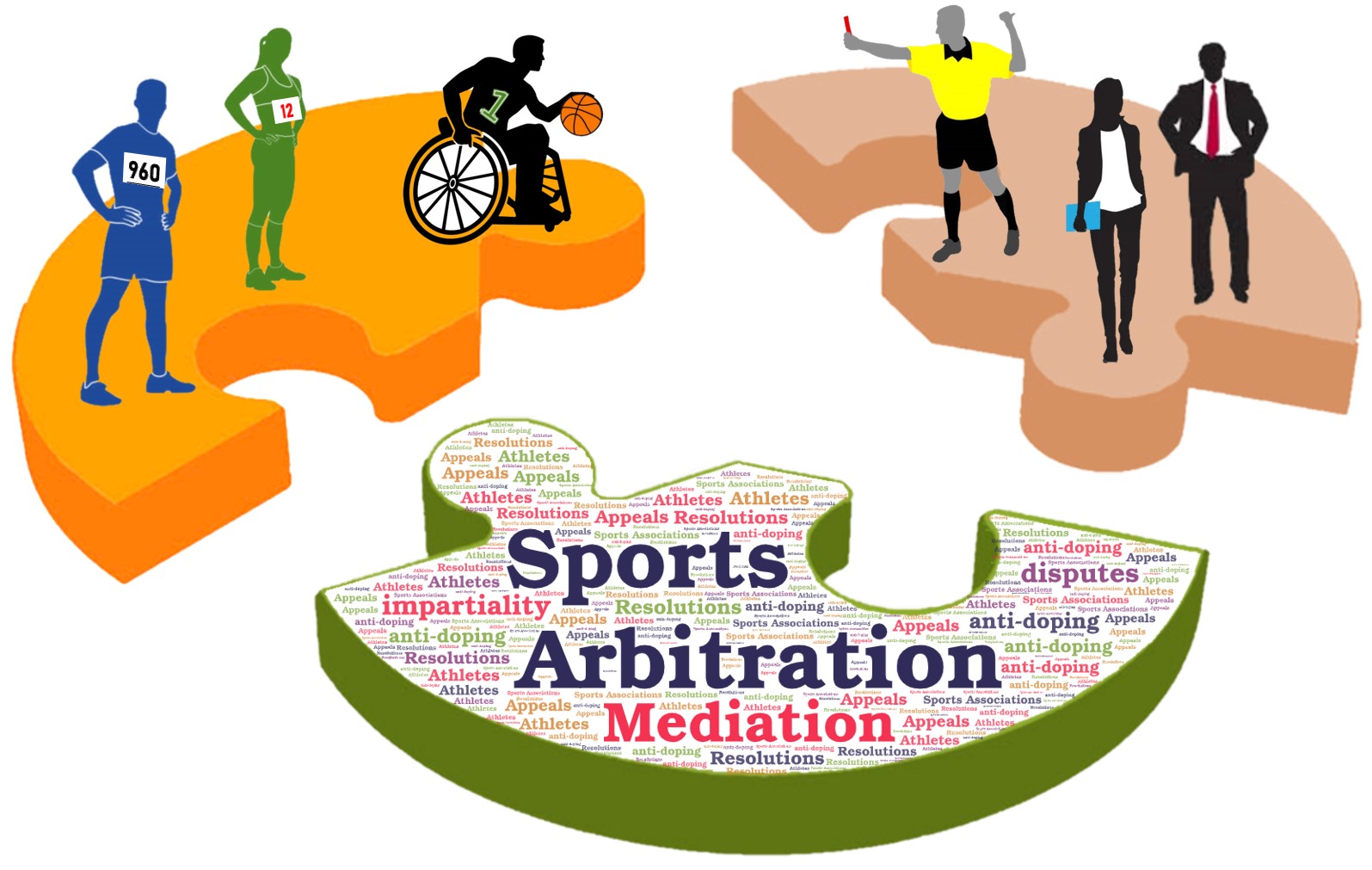
- The global sports market is estimated to have reached US$2.65 trillion (HK$21 trillion) in 2024, making it the 9th largest industry. Inevitably, the number of sports disputes (e.g. disciplinary breaches and commercial conflicts) has also grown visibly, resulting in an emerging demand for sports dispute resolution ("SDR") services around the world. By and large, given the short career span of an athlete, litigation is not a cost-effective resolution mechanism. Instead, arbitration and mediation services are more common in SDR, offering a faster and yet impartial resolution process.1Legend symbol denoting Department of Justice (2024) and Global Institute of Sport (2024). Given that Hong Kong is one of the top three arbitration hubs in the world, it should have a competitive edge in tapping into this emerging business.
- In the 2024 Policy Address, the Government announced its policy intention to establishing an SDR system in Hong Kong, leveraging the institutional strengths of the local legal profession. In January 2025, the Department of Justice formed an advisory committee to deliberate on the design and rules for setting up such a system. Reportedly, a pilot scheme will be launched in the second half of 2025 to run for 2-3 years, and local sports associations will be encouraged to join the scheme.2Legend symbol denoting Policy Address (2024), GovHK (2025) and South China Morning Post (2025).
- Globally, many countries (e.g. Mainland, Japan, Australia, Canada and France) have set up a nationwide SDR system over the past two decades to deal with domestic sports disputes, notwithstanding wide variations in their institutional design.3Legend symbol denoting Wai and Chik (2007), Chan (2024) and BCLP (2025). More specifically for the SDR mechanism in the United Kingdom ("UK"), it has received a rising number of sports disputes referrals from both domestic and international sports stakeholders in recent years, which may have reference value for Hong Kong. This issue of Essentials first reviews the sports dispute resolution process in Hong Kong, followed by the key features of SDR mechanism in the UK.
Recent developments in Hong Kong
- Global trends in sports dispute resolution: In the face of rising number of international sports disputes, the International Olympic Committee ("IOC") and some international sports federations jointly established the Court of Arbitration for Sport ("CAS") in June 1984 to handle disciplinary and commercial disputes through arbitration and mediation. CAS is now hailed as the "Supreme Court" for sports. However, the impartiality of CAS has recently been challenged on the grounds that (a) it is primarily controlled by IOC and international sports federations without representatives of other key stakeholders such as associations of athletes and sponsors; (b) the 454 arbitrators in CAS are appointed by IOC and international sports federations usually connected to the disputants; and (c) the selection criteria for arbitrators in CAS are allegedly not transparent.4Legend symbol denoting Bondulich (2016) and Clyde & Co (2024c).
- Emergence of national SDR mechanisms: As such, some countries set up their national SDR mechanism to resolve domestic sports disputes in a more timely and less costly manner, without the need to go to CAS. For Canada and Australia, their SDR mechanisms were established and funded by the governments or major national sports associations. For New Zealand and Ireland, they are set up as independent, non-profit-making bodies. Moreover, most of these SDR mechanisms have acted as the tribunals for anti-doping, disciplinary breaches and team selection cases, but a few of them (e.g. the UK and Japan) also adjudicate commercial disputes in sport.5Legend symbol denoting Wai and Chik (2007), Rigozzi and McAuliffe (2013), Lo Surdo, (2020), ADR Institute of Canada (2021), Chan (2024), Abe (2024) and Clyde & Co (2024b).
- Local debates on SDR mechanism: In Hong Kong, there are 85 sports associations, and most of them resort to internal procedures when in disputes.6Legend symbol denoting Department of Justice (2024) and Charles Russell Speechlys (2024). However, these internal procedures have been criticized as "inconsistent" and unable to resolve disputes, with occasional allegations of (a) unfair selection of athletes to participate in local or global sporting events; (b) unclear use of government subsidies; and (c) commercial disputes in the hosting of mega sporting events in Hong Kong.7Legend symbol denoting RTHK (2024), Charles Russell Speechlys (2024) and South China Morning Post (2024). Under the existing mechanism, these unresolved disputes could escalate into costly civil litigation as a last resort, which is beyond affordable limits of many complainants.
- Major issues of concerns: Following the significant results at the 2020-2024 Olympic Games and the opening of the Kai Tak Stadium in March 2025, the public is increasingly concerned about the development of the local sports industry. Some stakeholders call for setting up a more efficient and robust SDR mechanism in Hong Kong, facilitating its further development as a regional sports jurisdiction.8Legend symbol denoting Department of Justice (2024) and BCLP (2025). From the perspective of the legal profession, SDR mechanism can reinforce Hong Kong's status as a centre for international legal services in the Asia-Pacific region, with immense potential to become a regional sports dispute resolution hub. In 2025, Hong Kong is ranked as the second most preferred seat for international arbitration, just behind London and alongside Singapore.9Legend symbol denoting Charles Russell Speechlys (2024), Department of Justice (2025) and White & Case (2025). Actually, most of local sports associations are positive about the idea of having a new SDR mechanism, given their limitations in rules and procedures.10Legend symbol denoting South China Morning Post (2024, 2025) and Charles Russell Speechlys (2024).
Sports dispute resolution mechanism in the United Kingdom
- The sports industry in the UK is vibrant, with an economic contribution of £53.6 billion (HK$537 billion) in 2021, accounting for 2.6% of gross value added in the economy. Not only are there famous football leagues, other sports (e.g. rugby, tennis and snooker) also attract a wide spectrum of global audiences. More specifically for London, it has long been the most preferred location for international arbitration since 2010, with 5 000 cases of arbitrations annually and contributing at least £2.5 billion (HK$25 billion) of annual economic output. Hence, the UK is well-placed to become a global sports dispute resolution hub.11Legend symbol denoting GovUK (2024, 2025) and White & Case (2025).
- Landmark case of sports litigation in 1996: Before the mid-1990s, British sports associations relied on internal procedures to resolve disputes, similar to Hong Kong. In February 1996, an Olympic runner took civil litigation against the British Athletics Federation ("BFA"), seeking damages for a four-year ban for alleged use of performance enhancing drugs, which was later proven to be ungrounded as her urine sample had been mishandled. Her civil claim turned out to be unsuccessful, resulting in her bankruptcy. Yet BFA also went bankrupt due to the hefty legal costs.
Against this backdrop, nine key sports stakeholders in the UK (e.g. Olympic and national sports governing bodies, associations of athletes, community sports and sponsors) jointly established an independent, not-for-profit SDR mechanism in April 1997. It is now called the Sport Resolutions ("SR"), offering an expert and speedy dispute resolution mechanism saving the sports sector over €25 million (HK$218 million) in legal and administration costs since its inception.12Legend symbol denoting For a one-day arbitration conducted by a single-member panel in SR, it costs £1,000-£3,000 (HK$10,020-HK$30,060) per party. Additional charges will be made for using more arbitrators, longer hearing days and a larger number of files to be read by the panel. See Sport Resolutions (2025d) and Pitre (2024). SR has 15 staff working in four main teams, specialising in national and international work, safeguarding (i.e. protecting children and adults at-risk from abuse in sport) and governance investigation.
- Key features: Arbitration clauses involving SR have been incorporated into the agreements of most of the British athletic institutions, despite their voluntary nature. The key features of SR are briefly summarized below:
-
(a)Diverse backgrounds of board members: While the nine founding organizations represent a broad spectrum of interests from different sports stakeholders, the composition of SR's 11-member Executive Board (including the Chief Executive Officer) further enhances its impartiality. These nine founding organizations can only co-elect three representative board members, while the rest of seven are independent board members with expertise in sports arbitration, finance, marketing, professional and community sports, and journalism, helping to bring diverse skills sets and perspectives to the Board;13Legend symbol denoting The nine founding member organizations of SR are the British Olympic Association, the British Paralympic Association, the Scottish Sports Association, the Welsh Sports Association, the Northern Ireland Sports Forum, the British Elite Athletes Association, the Professional Players Federation, the Sport Recreation Alliance and the European Sponsorship Association. In October 2023, the UK Coaching also joined SR as a member organization. See Bondulich (2016) and Sport Resolutions (2025a).
-
(b)Extensive scope of dispute resolution services: Apart from arbitration for disciplinary breaches, team selection and commercial contracts, SR offers a wide range of services such as mediation, ad hoc panels and tribunals for international competitions and international sports federations, and independent investigations and reviews of sports governance and complaints (e.g. harassment and discrimination). SR is also the national adjudicator for anti-doping and sports safeguarding cases in the UK;14Legend symbol denoting Sport Resolutions (2025b, 2025c, 2025e).
-
(c)Unique mechanism for selection and processing of arbitrations: SR has some 350 arbitrators in two categories, namely Legal Members and Specialist Members, with a greater diversity of talent pool for the parties to the arbitration to choose from a closed list. While Legal Members are former judges and lawyers with extensive legal experience in sports dispute resolution, Specialist Members are professionals from other sectors who also have experience in handling sports disputes, such as doctors, scientists, pharmacologists, social workers, accountants, human resources professionals, sponsors, coaches and ex-athletes;15Legend symbol denoting Sport Resolutions (2024a, 2024d).
-
(d)Legal professionals taking the lead in arbitration: As regards the arbitration procedure, the arbitration parties can jointly determine the composition of the panel and the arbitrators. While a single-member arbitration panel is handled by a Legal Member, a three-member arbitration panel consists of a Legal Member as the chair and two Specialist Members with their expertise relevant to the dispute. More specifically, the Legal Member will preside over the arbitration, give advisory opinions, and work out a decision together with the Specialist Members in accordance with their independent assessments. To offer flexibility in curating custom arbitration panels, the arbitration parties may also ask to appoint arbitrators with specific skills outside the closed list of SR, in order to have more confidence that the panel has an adequate understanding of the dispute and that their interests are equally represented;16Legend symbol denoting Bondulich (2016), Pitre (2024) and Sport Resolutions (2024c).
-
(e)Open recruitment of arbitrators and mediators: Unlike CAS, SR openly recruits arbitrators on a triennial basis with transparent selection criteria. In short, Legal Members normally need to have (i) seven years of legal or arbitration experience; (ii) chaired at least 10 tribunals, reviews or investigations; and (iii) recently sat on at least five sports disciplinary, arbitral or appeal panels. For Specialist Members, they should have (i) recognised professional qualifications; (ii) recent experience in at least two of the following areas such as anti-doping, safeguarding, athlete welfare, corporate governance, sports disciplinary procedures, commercial contracts in sport, employment and discrimination; or (iii) extensive years of involvement in high performance sport (e.g. as a competitor, coach or administrator).
SR also sets out the expected expertise of applicants for specific panels. For example, the National Anti-Doping Panel requires Specialist Members to have expertise in chemistry, pharmacology and physiology, while Specialist Members of the National Safeguarding Panel must have expertise in forensic risk assessment of the suitability of individuals to work with vulnerable groups, or legal knowledge on employment, human rights and anti-discrimination. SR also provides a set of selection criteria for mediators;17Legend symbol denoting Sport Resolutions (2024b, 2024c). and -
(f)Legal support to athletes and clubs with limited financial resources: Since 2012, SR has provided pro bono legal advice service to those athletes and sports clubs in the UK with limited financial means to access sports dispute resolution services. In a nutshell, SR maintains an extensive list of sports arbitrators who agree to assist these parties free of charge. After matching, SR will pass on the contact of the parties to the lawyer to follow up the cases.18Legend symbol denoting Sport Resolutions (2025f).
-
- Policy effectiveness: After almost three decades of development, SR has evolved from a UK-focused SDR service to a global player in sports dispute resolution. In 2024, it helped individuals from 32 countries in 38 sports, along with support given to 26 international sports federations (e.g. cricket, tennis, ski and snowboard, athletics, boxing, triathlon, netball and rugby).
- During 2015-2024, the annual number of requests for dispute resolution guidance received by SR soared from 179 to 379. It is noteworthy that those requests lodged by international sports federations surged from none to 64, primarily because of the impartial image of SR and the wide diversity of its arbitrators and mediators.19Legend symbol denoting As regards the types of caseload handled by SR in 2024, 37% are safeguarding, 19% are related to anti-doping, followed by 16% on disciplinary and integrity issues, along with 6% on governance and a further 6% on commercial disputes. See Sport Resolutions (2023, 2024a), Clyde & Co (2024a) and Pitre (2024).
Prepared by LEUNG Chi-kit
Research Office
Research and Information Division
Legislative Council Secretariat
19 May 2025
Research Office
Research and Information Division
Legislative Council Secretariat
19 May 2025
Endnotes:
- Department of Justice (2024) and Global Institute of Sport (2024).
- Policy Address (2024), GovHK (2025) and South China Morning Post (2025).
- Wai and Chik (2007), Chan (2024) and BCLP (2025).
- Bondulich (2016) and Clyde & Co (2024c).
- Wai and Chik (2007), Rigozzi and McAuliffe (2013), Lo Surdo, (2020), ADR Institute of Canada (2021), Chan (2024), Abe (2024) and Clyde & Co (2024b).
- Department of Justice (2024) and Charles Russell Speechlys (2024).
- RTHK (2024), Charles Russell Speechlys (2024) and South China Morning Post (2024).
- Department of Justice (2024) and BCLP (2025).
- Charles Russell Speechlys (2024), Department of Justice (2025) and White & Case (2025).
- South China Morning Post (2024, 2025) and Charles Russell Speechlys (2024).
- GovUK (2024, 2025) and White & Case (2025).
- For a one-day arbitration conducted by a single-member panel in SR, it costs £1,000-£3,000 (HK$10,020-HK$30,060) per party. Additional charges will be made for using more arbitrators, longer hearing days and a larger number of files to be read by the panel. See Sport Resolutions (2025d) and Pitre (2024).
- The nine founding member organizations of SR are the British Olympic Association, the British Paralympic Association, the Scottish Sports Association, the Welsh Sports Association, the Northern Ireland Sports Forum, the British Elite Athletes Association, the Professional Players Federation, the Sport Recreation Alliance and the European Sponsorship Association. In October 2023, the UK Coaching also joined SR as a member organization. See Bondulich (2016) and Sport Resolutions (2025a).
- Sport Resolutions (2025b, 2025c, 2025e).
- Sport Resolutions (2024a, 2024d).
- Bondulich (2016), Pitre (2024) and Sport Resolutions (2024c).
- Sport Resolutions (2024b, 2024c).
- Sport Resolutions (2025f).
- As regards the types of caseload handled by SR in 2024, 37% are safeguarding, 19% are related to anti-doping, followed by 16% on disciplinary and integrity issues, along with 6% on governance and a further 6% on commercial disputes. See Sport Resolutions (2023, 2024a), Clyde & Co (2024a) and Pitre (2024).
Essentials are compiled for Members and Committees of the Legislative Council. They are not legal or other professional advice and shall not be relied on as such. Essentials are subject to copyright owned by The Legislative Council Commission (The Commission). The Commission permits accurate reproduction of Essentials for non-commercial use in a manner not adversely affecting the Legislative Council. Please refer to the Disclaimer and Copyright Notice on the Legislative Council website at www.legco.gov.hk for details. The paper number of this issue of Essentials is ISE01/2025.